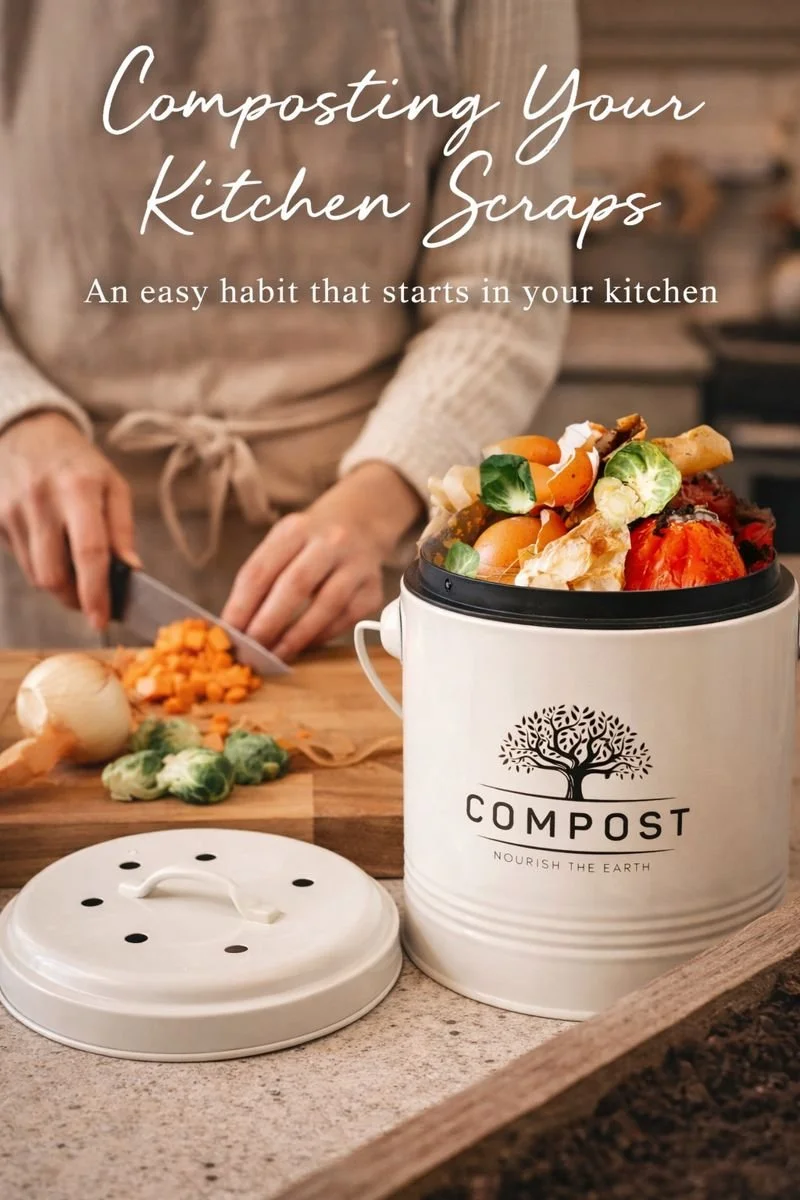
Composting from Kitchen Scraps
to Garden Soil
Composting is the natural process of breaking down organic materials, like kitchen scraps and garden waste, into nutrient-rich soil. Instead of sending food scraps to the trash, composting allows them to return to the garden where they improve soil health and support plant growth.
At its core, composting is simply working with nature to recycle organic matter.
5 Reasons Why Composting
Is Beneficial
1. Reduces Waste
Composting keeps food scraps out of landfills. Vegetable peels, eggshells, and plant trimmings can all be put to better use in the garden instead of becoming trash.
2. Improves Your Soil
Finished compost adds nutrients back into the soil, improving structure and supporting healthier plants over time.
3. Saves Money on Gardening Products
By making your own compost, you reduce the need for store-bought soil amendments and fertilizers.
4. Helps Soil Retain Moisture
Compost improves soil’s ability to hold moisture, helping plants stay hydrated longer — especially important during dry or hot periods.
5. Reduces Greenhouse Gases
When food waste breaks down in landfills, it produces methane. Composting at home helps reduce these emissions and supports a more sustainable garden system.
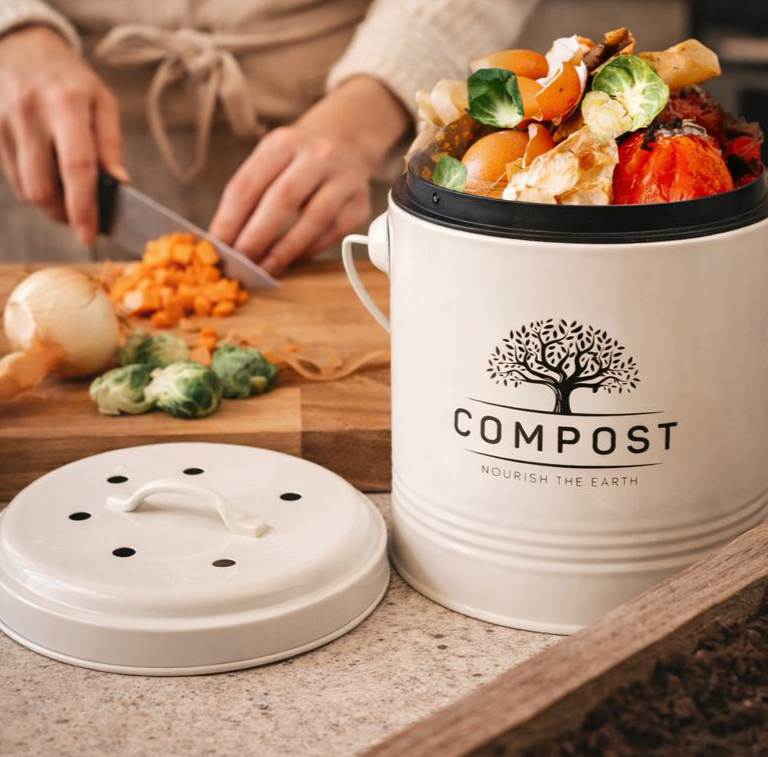
My favorite scraps collecting
bucket that makes it easy to use
while meal prepping.
Fill it up with kitchen scraps you’d through away.
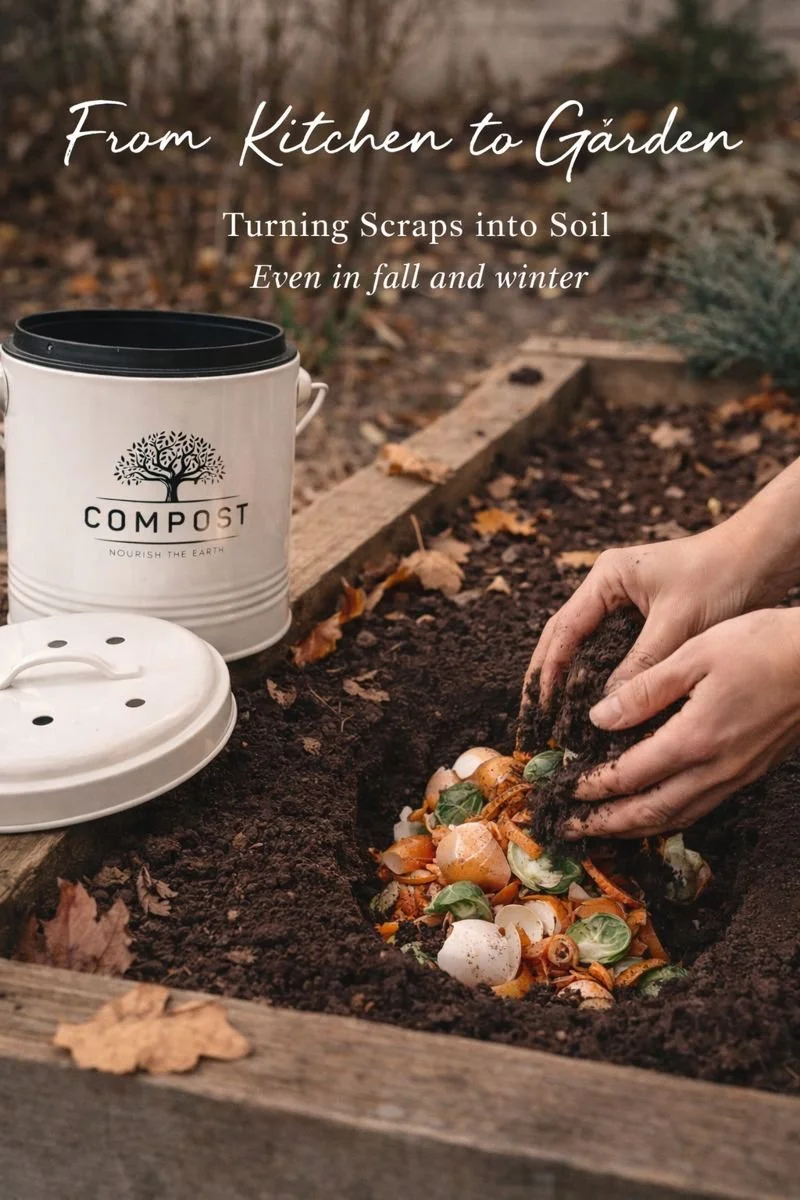
Empty the full container into a hole in your raised garden bed or composting area in your garden.
Cover up and watch it work.
Fall and Winter is the best time to do this garden task. It gives scraps time to break down before your garden comes to life in the Spring Season.
Gives the beneficial worms plenty of food over the cold season months.
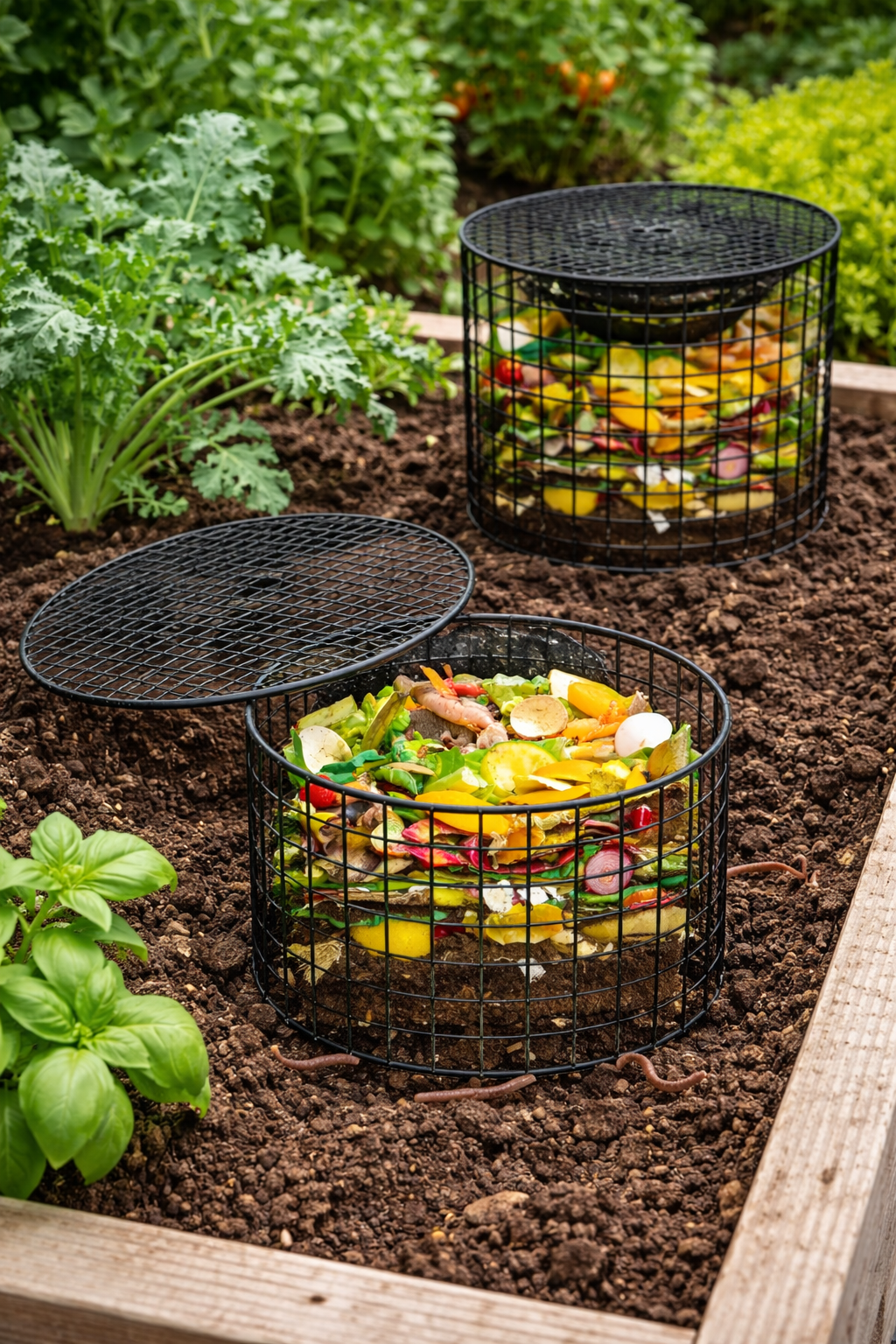
In-Ground Worm Composting
In-ground worm composting bins make it easy to recycle kitchen scraps directly into your garden soil. These metal bins sit right in the bed, allowing worms to break down food waste naturally while distributing nutrients into the surrounding soil. It’s a simple, low-effort way to improve soil health, reduce waste, and create rich organic matter exactly where your plants need it most.
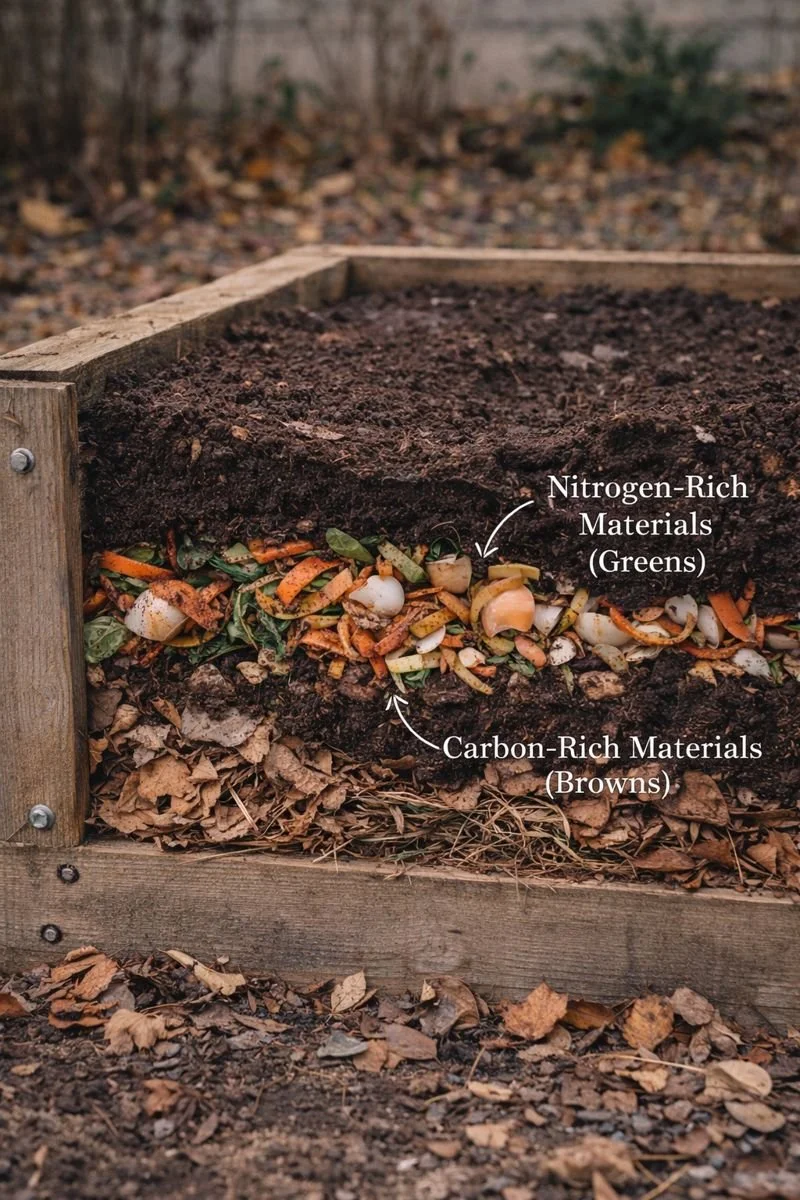
What You Need for a Good Compost
A healthy compost needs a balance of carbon-rich materials (browns) and nitrogen-rich materials (greens). Together, they help materials break down efficiently without odor or pests.
Carbon-Rich Materials (Browns)
These materials provide structure and help absorb moisture:
Dry leaves
Straw or dried grass
Shredded cardboard or paper
Wood chips or untreated sawdust
Add garden plants that are no longer producing, avoiding and diseased plants (throw those in the trash)
Nitrogen-Rich Materials (Greens)
These materials add moisture and nutrients:
Vegetable scraps
Fruit scraps (in moderation)
Coffee grounds
Eggshells
Fresh plant trimmings
A simple rule: aim for more browns than greens to keep compost balanced.
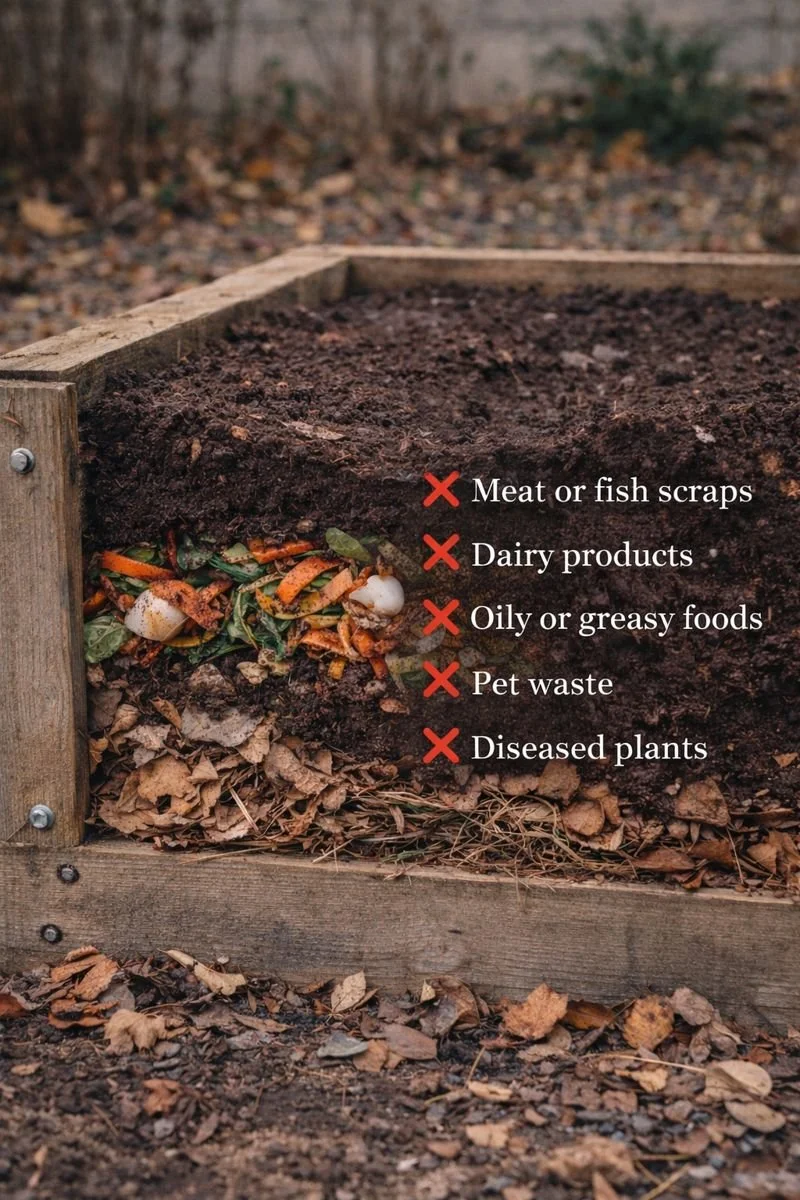
What to Avoid When Choosing
Your Materials
Some items can attract pests or cause odor problems:
Meat or fish scraps
Dairy products
Oily or greasy foods
Pet waste
Diseased plants
Keeping these out helps your compost stay clean and manageable.
3 Easy Solutions for Common Composting Problems
1. Compost Has an Odor
Odor usually means too many greens. Add dry browns like leaves or cardboard and gently mix.
2. There Are Pests or Critters
Bury food scraps deeper and avoid adding meat, dairy, or cooked foods.
3. Compost Is Too Dry
Add a small amount of water and mix lightly. Compost should feel like a wrung-out sponge.
Ready to Transform Your Garden?
Composting doesn’t have to be complicated. By saving kitchen scraps and returning them to your garden, you’re building healthier soil one step at a time. Whether you compost year-round or seasonally, every scrap counts toward a more productive and sustainable garden.