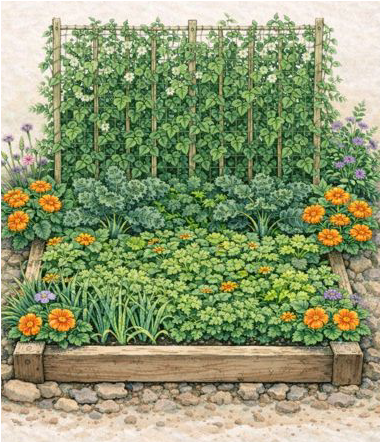
What I Plant, What I Eat, and What Has Worked for Me
After four years of gardening, I’ve learned something important: I don’t plant everything anymore.
I plant what:
Grows well in my garden
Fits my growing space
And actually gets eaten in my kitchen
This guide is based on what has consistently worked for me in Zone 7a, in Southwestern Idaho. If you’re in a similar climate, this will give you a solid, realistic starting point for spring planting.
Easy Companion Vegetable Seeds I Direct Sow in Spring
ROOT CROPS don’t like their roots disturbed
These seeds grow best when planted directly into the ground or raised beds. I sow them as soon as the soil can be worked—usually about a week before my last frost date.
In Zone 7a, this is typically mid-April.
I start prepping my soil as soon as I can work the soil, somewhere between mid-March - April 1 so beds are ready when it’s time to plant.
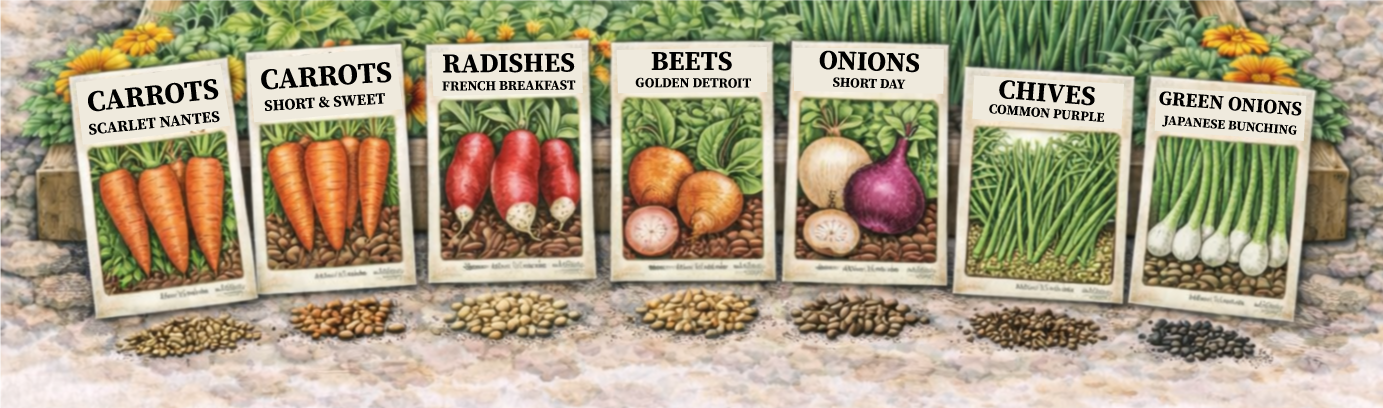
ROOT CROPS don’t like their roots disturbed
🥕 Carrots
Root Crop
Short ‘n Sweet - 65-70 days from sowed to harvest
These are the first carrot seeds I plant each spring and they do well in my beds that are not as deep. You can replant these carrots once you have harvested your first batch of these little shorties
Scarlet Nantes (longer varieties) 65-80 days from sowed to harvest
I plant only 1 row first. You can replant these carrots once you have harvested your first batch of these.Plant a 2nd row about 2 weeks later for succession planting so all carrots aren’t ready at once.
These need deeper raised beds. You can repeat this process if you have the room.
Succession planting keeps harvests steady instead of overwhelming.
🌱 Radishes
Root Crop - 25 -45 days from sowed to harvest
Champion - fast-growing, bright red heirloom variety known for its large size (up to 2 inches), mild flavor, and crisp, white flesh that remains tender without becoming pithy. Matures in 25–30 days, making it ideal for spring or fall, and holds up well in storage.
French Breakfast - are elongated, 2-to-4-inch heirloom root vegetables with a vibrant scarlet-pink top, white tip, and crisp, mild-to-spicy flavor. Matured in just 25–30 days, they are best grown in cool spring.
I plant:
1 row of each variety
Then add two more rows every 2 weeks until the night time temps reach 50 degrees. After that it becomes too hot for these to grow.
Radishes:
Work well in shorter raised beds
Don’t take up much space
Trap Crops: To maximize benefits, let some radishes go to seed and remain in the soil rather than harvesting them early, allowing them to continue attracting pests.
Companion Planting: Plant in and around cucumber hills, or near peppers and leafy greens.
Beets - 50-70 days from sowed to harvest. Beets are ready to harvest when their roots are the size of a golf ball.
Root Crop (Grown Mainly for big leafy Greens)
Golden
Chioggia
I mostly grow beets for their large, leafy greens, not the roots.
Onions - 10–12 hours of daylight to bulb. Best harvested in late spring to early summer (April–June) when 50-75% of the green tops have fallen over and turned brown
Root Crop
Short-day varieties
Brown grow best for me, but I plant brown, white, and purple
These seeds are planted directly into prepared beds in early spring.
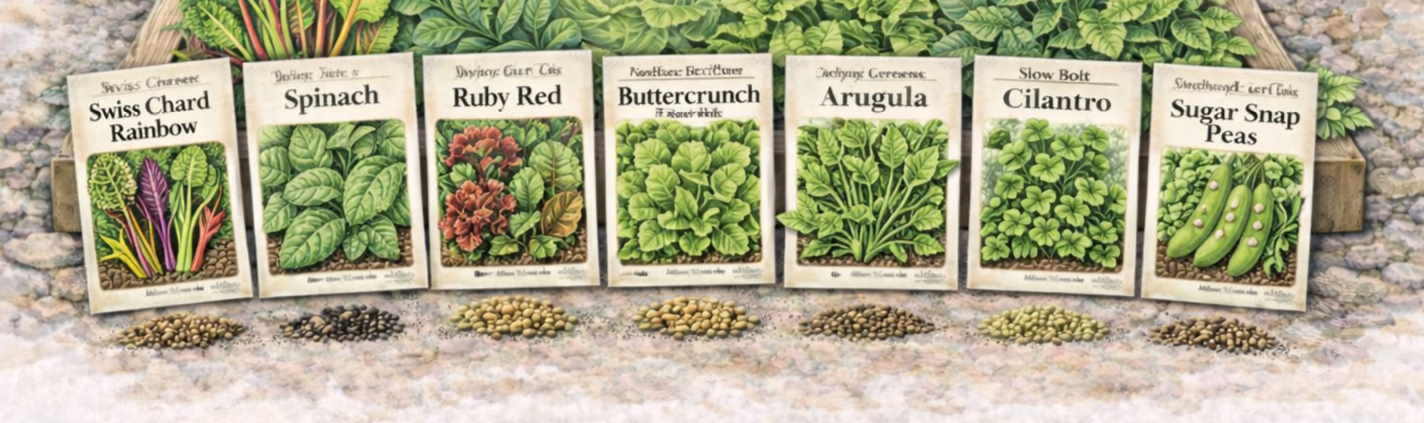
GREENS & VEGGIES I have found directly sowed in your garden is best for me.
All of these greens can use the "cut-and-come-again". This method is where you only take the outer leaves of the plant, leaving the middle leaves to continue to grow. Cut with pruning shears or scissors at the soil level. This keeps your greens growing & producing throughout the season providing you many harvests.
Swiss Chard - Harvest 4–6 weeks after planting by cutting outer leaves near the base (about 1-2 inches above soil) when they reach 6–9 inches tall, leaving inner leaves to regrow for a continuous "cut-and-come-again" harvest.
Above-Ground Crop
Rainbow Swiss Chard
This variety has been the most reliable producer in my garden year after year.
Spinach - Harvest spinach when leaves are 3–6 inches long, typically 30–50 days after planting, by cutting outer leaves near the base with a sharp knife. Leaving the central, smaller leaves allows the plant to continue growing for multiple harvests every 3-4 days.
Above-Ground Crop
Spinach thrives in cool spring temperatures and is always one of my earliest plantings.
🥗 Leafy Greens (Lettuce Mixes) - To harvest leafy greens, use the "cut-and-come-again" method: pick the outer, larger leaves first, leaving the small, central leaves and the crown (growing point) intact, so the plant can keep producing for a continuous supply.
Above-Ground Crop
I mostly grow:
Ruby Red
Buttercrunch
Baby Leaf Lettuce Seeds (Colorful Spring Mix) has a great variety of seeds
These are easy, productive, and perfect for early spring harvests.
🌿 Arugula - Harvest when leaves are 3–6 inches long by cutting outer leaves 1 inch above the soil, or cut the entire plant down to 2 inches to encourage regrowth "cut-and-come-again". Regular harvesting of tender, young leaves prevents the plant from bolting (flowering), which makes the leaves bitter.
Above-Ground Crop
Fast-growing and dependable in cool weather. Succession planting can be used with this veggie to insure you always have arugula for your salads.
🌱 Sugar Snap Peas - Harvest sugar snap peas when pods are bright green, plump, and crisp, typically 60–70 days after planting. For maximum sweetness, pick every 1–3 days in the morning, focusing on pods that are 3–4 inches long and starting to fill out.
Trellis Crop - using this as the back of a raised bed backdrop. Don’t let this crop shadow/shade your other veggies that share the same bed.
I plant snap peas:
3 seeds per hole
About 3 inches apart (closer than recommended)
This creates a lush, full trellis, which I prefer both visually and for yield. This is one of my family’s favorite garden veggie.
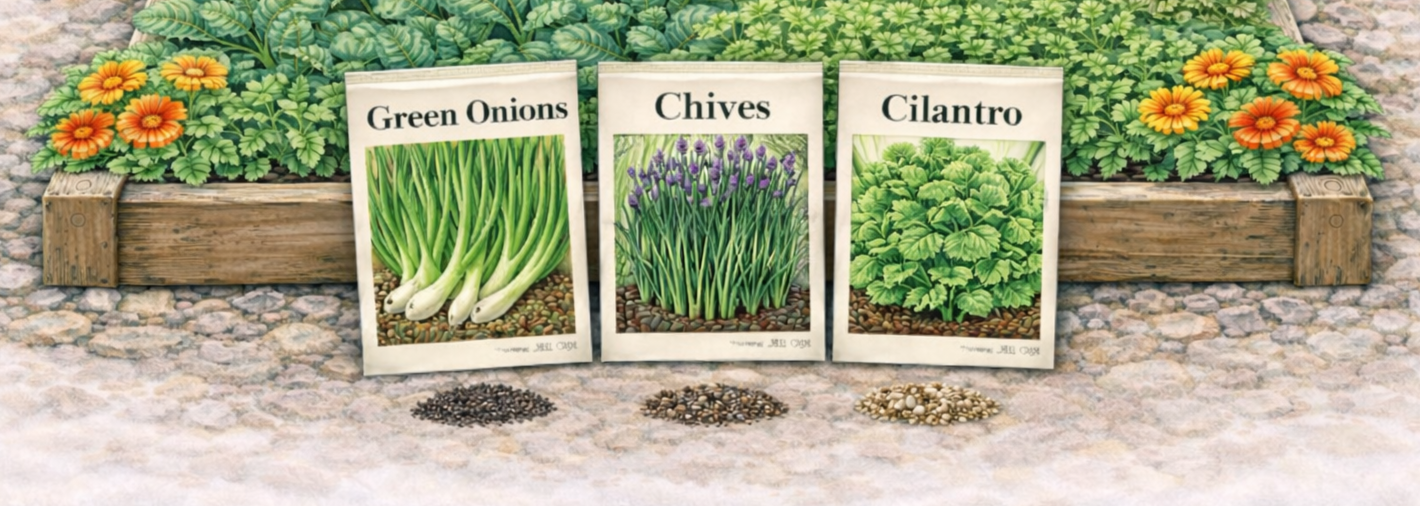
HERBS
🌿 Cilantro - Herb- Harvest when plants are 6–8 inches tall, typically 4 weeks after sprouting, by cutting outer stems 1–2 inches above the soil, allowing the inner, younger leaves to continue growing. I use a scatter sowing method to plant these. I rough up the soil and sprinkle the seeds in the area I want to plant them, cover them 1/4” - 1/2” with my soil mixture, press the soil to compact a little and mist them generously with water.
Slow Bolt variety
This helps extend the harvest window before warm weather causes bolting. Succession planting can be used to keep a good supply if you love this herb. When the temps reach nightly temps of 50 degrees allow this herb to flower. Once you see the brow seeds you can harvest them to use the seeds when the temps get cooler again or use as coriander in your recipes.
Chives - Herb – Above Ground - Plant it Once - are one of the easiest herbs I grow and come back reliably each year.
I direct sow them in early spring once the soil is workable. They don’t take up much space, fit easily along bed edges, and are something I use often in the kitchen. I use a scatter sowing method to plant these. I rough up the soil and sprinkle the seeds in the area I want to plant them, cover them 1/4” with my soil mixture, press the soil to compact a little and mist them generously with water.
Green Onions (Scallions) - Above Ground - Plant it Once - Green onions are a spring staple in my garden.
I sow them directly into the garden early in the season and harvest them as needed rather than all at once. They grow well in small spaces and are perfect for steady, cut-and-come-again harvesting. I use a scatter sowing method to plant these. I rough up the soil and sprinkle the seeds in the area I want to plant them, cover them 1/8” - 1/4” with my soil mixture, press the soil to compact a little and mist them generously with water.
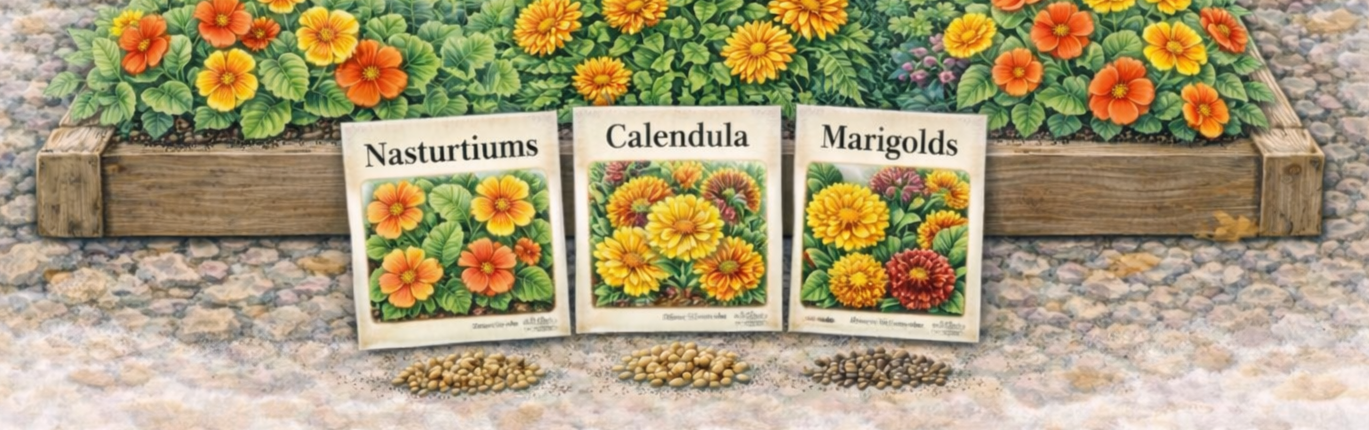
FLOWERS bring pollinators to your garden and can help with pest control. Seeds go a long way as you only need a few seeds per hole to get big beautiful flowers.
Easy Companion Flowers I Direct Sow in Spring
Nasturtiums - Flower – Companion Plant
I direct sow nasturtiums in spring once the soil is workable. They’re easy to grow, spill beautifully over bed edges, and pair well with vegetables as part of a companion planting system.
Calendula - Flower – Companion Plant
Calendula is another flower I sow directly in the garden early in the season. It’s cold tolerant, quick to germinate, and a consistent part of my garden beds alongside vegetables.
Marigolds - Flower – Companion Plant
Marigolds are a staple in my garden, and I grow them both from seed and as purchased starts. I direct sow seeds in spring once the soil is workable, or tuck in starts when they become available. They fit easily into vegetable beds, grow reliably, and are a simple way to add companion flowers throughout the garden.
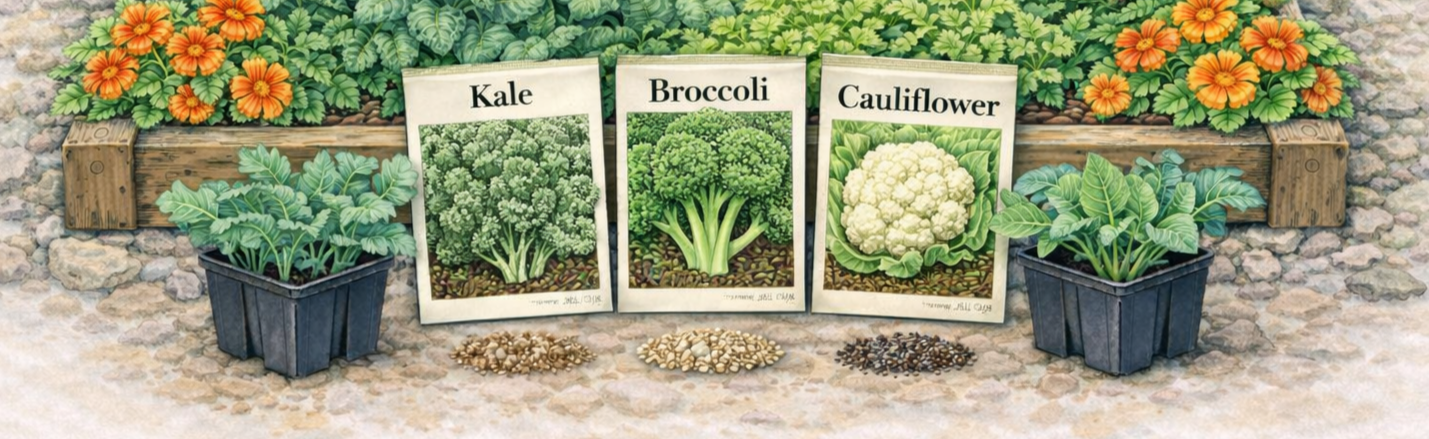
COOL SEASON VEGGIES give a canopy to your companion planting garden
Seeds I Start Indoors (or Buy as Starts)
Depending on your zone, these may not be available as starts until early April.
I’ve done both indoor seed starting and buying starts, depending on the season.
I start these in:
Seed-starting trays
Under grow lights (like the setup shown in my tools & supplies page)
🥦 Broccoli
Cool-Season Crop
I’ve successfully grown broccoli both ways.
Spring Crop (Indoors):
Start seeds early to mid-February
Plant broccoli starters (transplants) in early spring, 2–4 weeks before the last frost date, or in late summer for a fall harvest. Ideal conditions are 6–8 weeks before the first fall frost, or when temperatures are 40–70°F. They prefer 4–6 weeks of growth, 4–6 inches in height, and hardened-off seedlings for planting.
Typically mid-March to early April
Starting seeds indoors gives me a backup plan:
If my seedlings don’t thrive, I can still buy starts and not miss the season.
⚠️ Important note:
Broccoli should be grown in a bed where netting can be installed. I have found, aphids & the white butterfly love broccoli and will destroy it if left uncovered.
Kale
Cold-Hardy Crop
Kale has always been easy for me to grow. I plant a couple of different varieties each year.
Light frost or even snow makes it stronger
Indoor starting may be helpful in colder climates
Spring Crop (Indoors):
Start seeds late January to February
Plant kale starters (seedlings) in early spring, about 3 to 5 weeks before the last average frost date. Kale thrives in cool weather and tolerates frost, with ideal planting when soil is workable and temperatures are below 75°F.
Spring Crop (Outdoors):
Direct sow early to mid-March
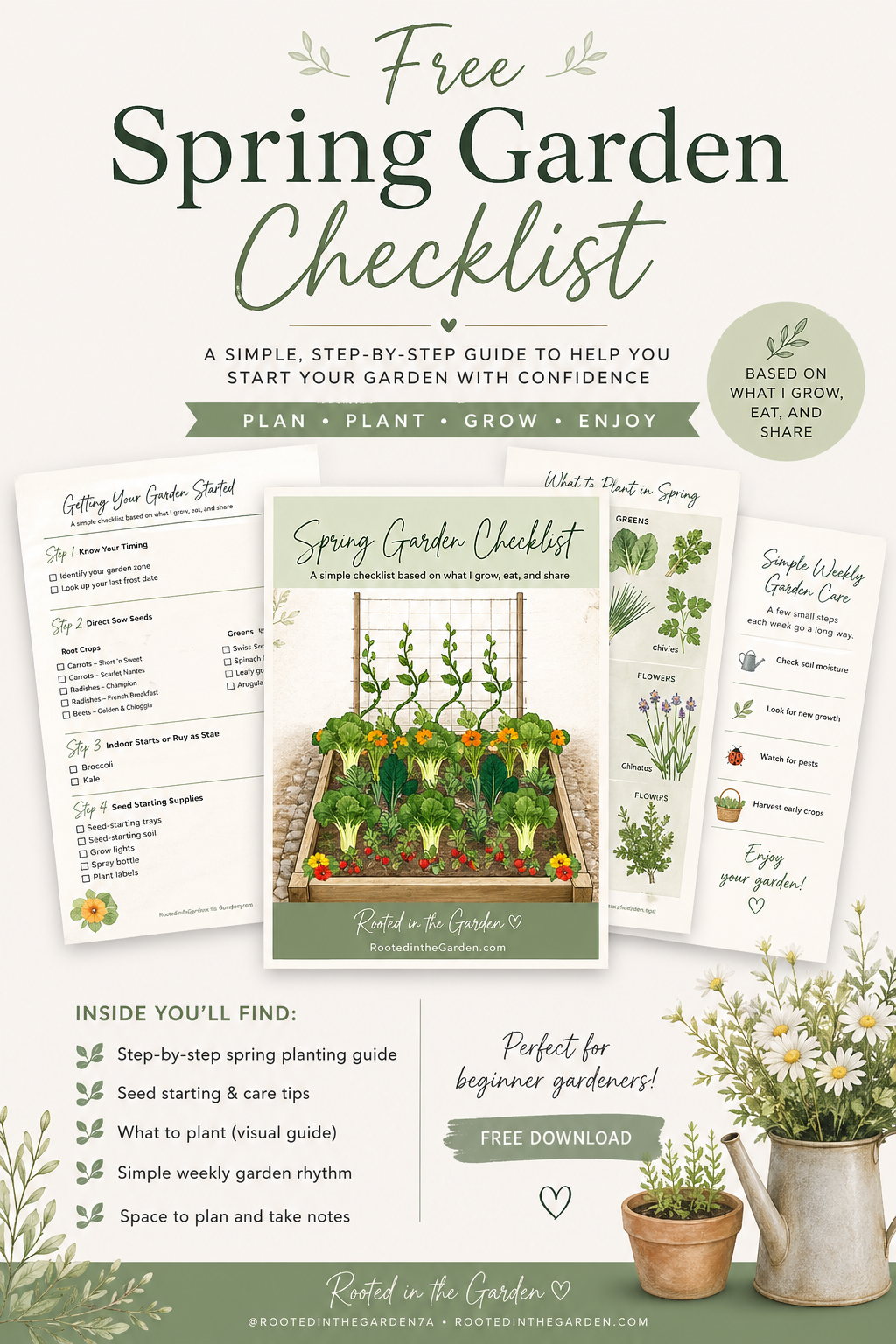
Planning your seed starting schedule?
This simple Spring Garden Checklist helps you stay organized as you prepare your soil, start seeds, and plan your garden 🌱
👈 Download the Free Checklist
Final Thoughts
This list reflects four years of trial, error, and refinement.
I no longer plant everything—only what grows well, fits my space, and ends up on our plates.
Water gently and consistently. I rely on a spray mister to keep the soil moist without oversaturating or shifting the seeds. If the soil feels damp when you touch it—but not wet—you’re doing it right.
If you’re just starting out, this approach keeps gardening:
Less overwhelming
More productive
And far more enjoyable