Garden Starts Worth Buying
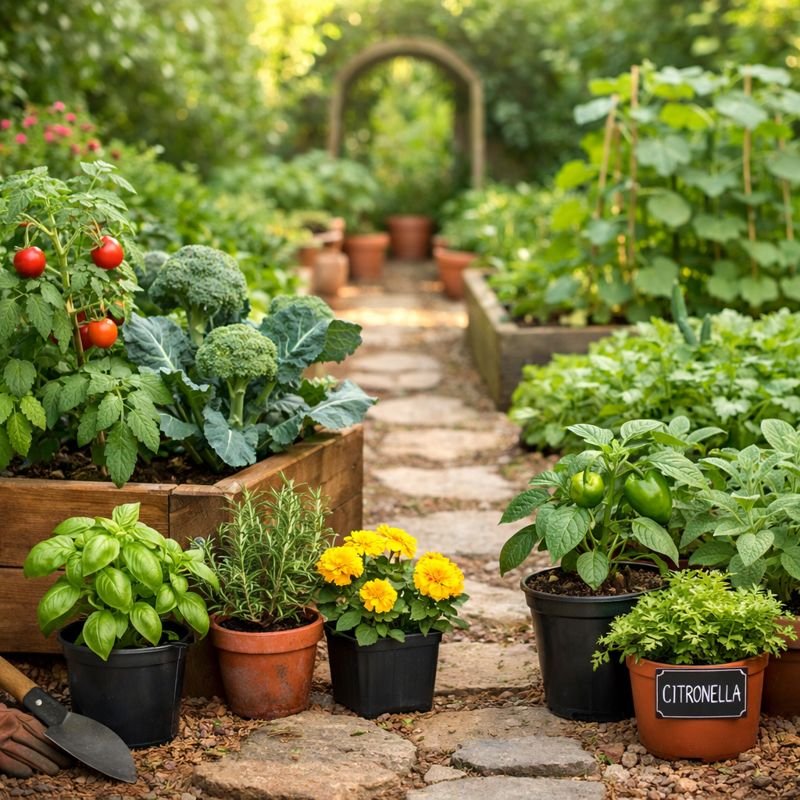
Garden Starts Worth Buying
Why These Plants Thrive When Purchased as Starts - Plus Companion Planting Tips
Starting a garden from seed can be rewarding—but not every plant is worth the wait. Some vegetables and herbs grow faster, stronger, and more reliably when planted as established starts, especially in raised garden beds.
This guide highlights garden starts worth buying and shows how companion planting helps each bed thrive with less effort and more success.
NOTE - Some plants just don’t make it. If you are buying from a big box store, save your receipt and container just incase. Most people don’t know this but if your beautiful plant doesn’t survive: you can return it.
Tomatoes + Basil + Sage + Marigolds
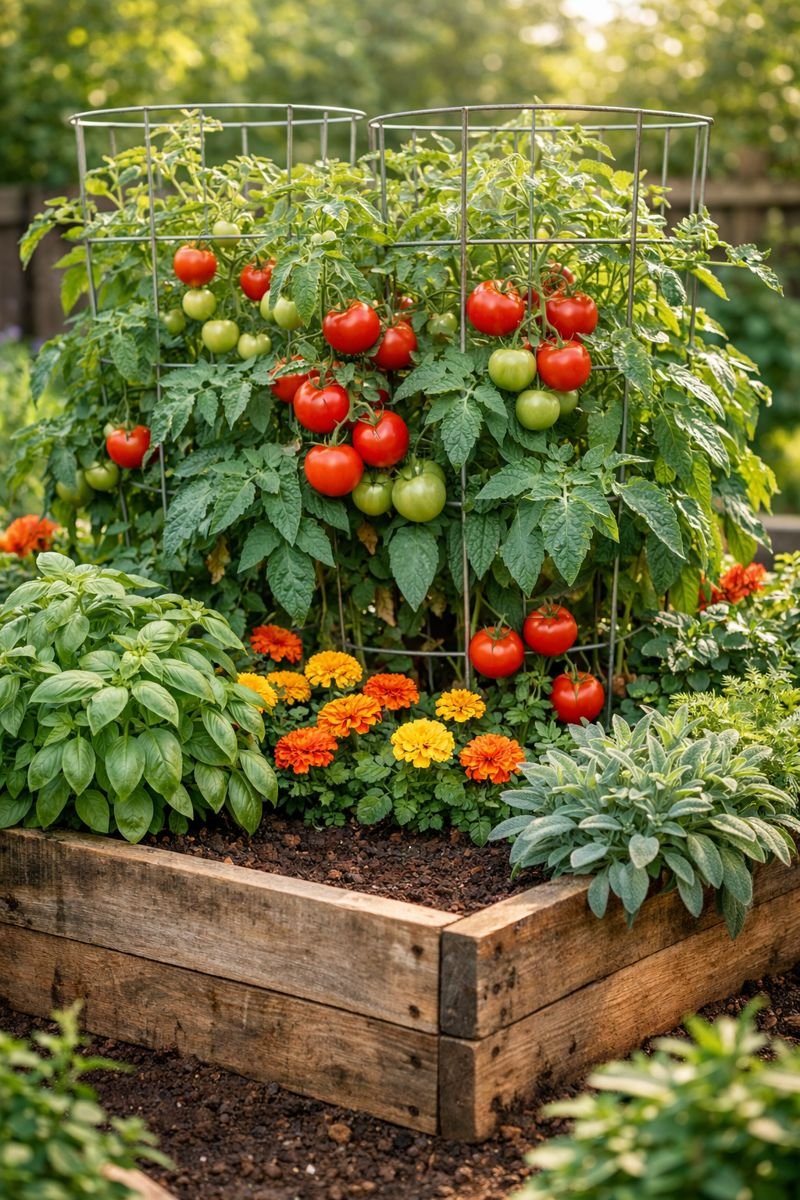
Why Tomatoes Are Worth Buying as Starts
Tomatoes are one of the most popular garden plants—and one of the best to buy as established starts. Transplanted tomatoes grow faster, handle pests better, and begin producing weeks earlier than seed-grown plants.
Buying healthy starts allows you to focus on building strong roots and steady growth rather than waiting on germination.
Companion Planting for Success
Basil improves growth and flavor while helping deter pests
Sage adds structure and repels unwanted insects
Marigolds protect roots and attract beneficial pollinators
Planted together in a raised bed, these companions create a balanced, productive growing environment that supports tomatoes all season long.
Broccoli + Cauliflower + Marigolds + Herbs
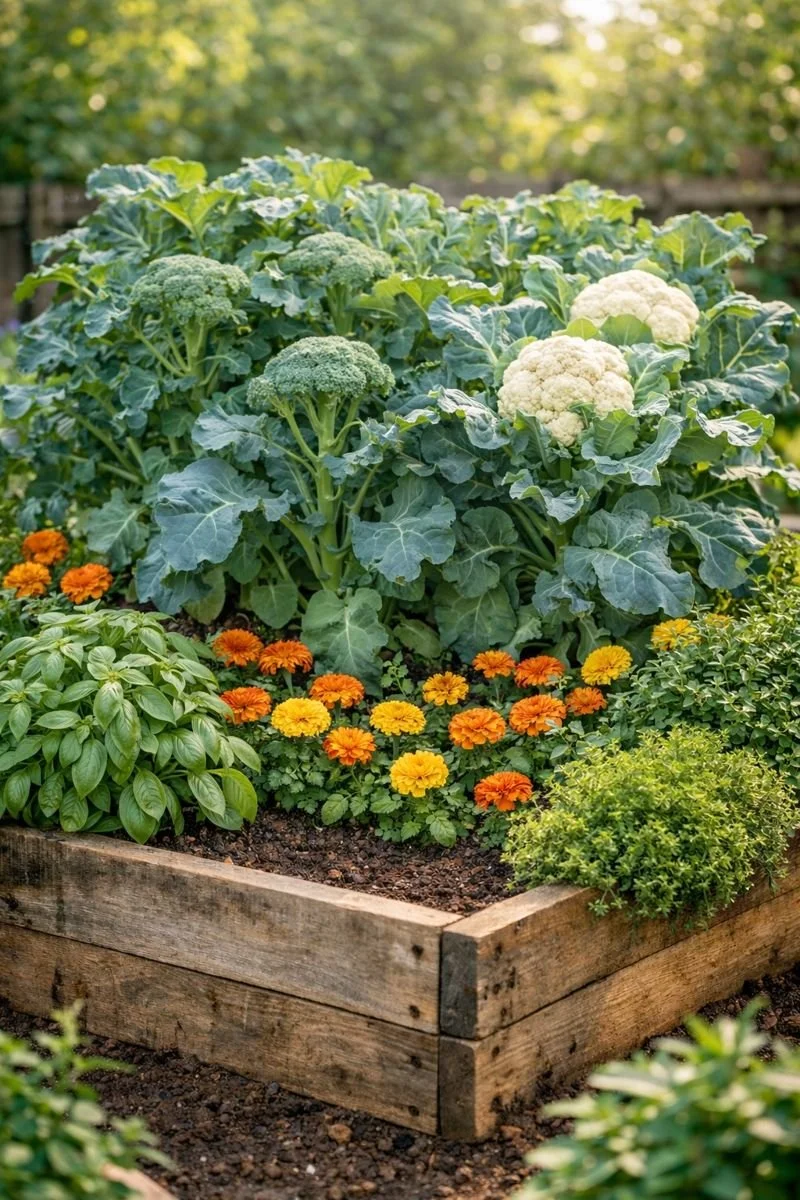
Why Cool-Season Crops Benefit from Starts
Broccoli and cauliflower are sensitive to timing and temperature. Starting with established plants helps ensure proper development, stronger stems, and better head formation—especially in spring and fall gardens.
Seed-grown brassicas can struggle during unpredictable weather, but healthy starts give you a reliable foundation.
Companion Planting for Support
Marigolds help deter pests and improve soil health
Herbs like thyme, sage, and oregano repel insects and soften
the bed edges.
I pack in the veggie to maximize growing space. Keeping plants maintained and dead leaves & foliage under control improves airflow and reduces disease.
This combination works especially well in raised beds where soil quality and drainage are easy to manage.
I have been growing these veggies for 3 years now. Year #1 was from starts and didn’t survive. Year #2 was from buying plants. I covered them with row netting covers on hoops and had a bountiful harvest. Year #3, was successful with growing starts and buying, however I didn’t cover them. They grew big and beautiful and were home to so many pests. Couldn’t eat any of the harvest, which my chickens loved. This coming Spring, I’ll be buying starts and using netting to protect these crops.
Zucchini + Snap Peas & Pole Beans + Herbs + Marigolds
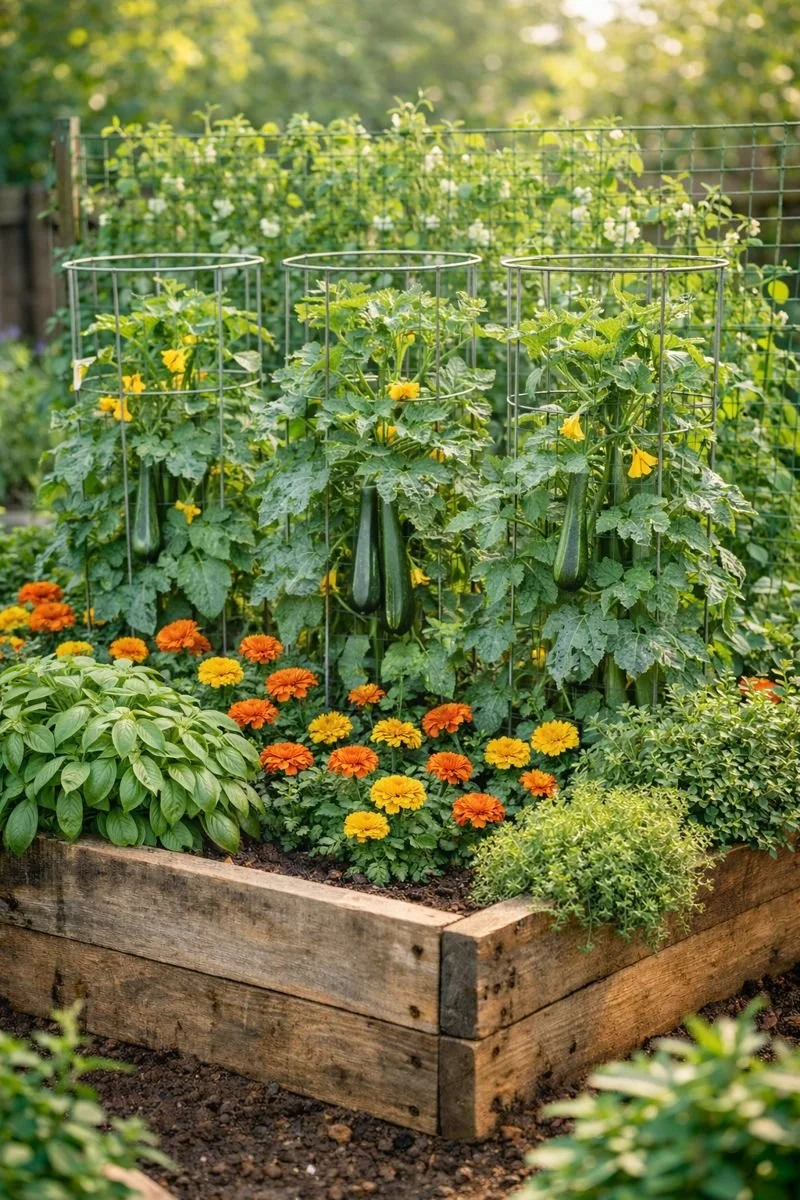
Why Zucchini Thrives as a Start
Zucchini grows quickly, but buying a start helps avoid early pest damage and weak seedlings. Established plants take off faster and are easier to train vertically—saving space and improving airflow.
Growing zucchini upright also makes harvesting easier and keeps fruit cleaner.
Companion Planting & Layout Tips
Snap peas are a cooler weather veggie and can be planted early in the spring. They need a trellis for support to grow big and strong yielding lots of delicious pods for eating raw, steaming, stir-frying and salads. Snap Peas can be planted behind the zucchini, adding vertical interest. Don’t allow them to shade the zucchini or cauliflower plants.
Snap peas act as a natural, nitrogen-fixing soil builder, making them an ideal preceding crop for heavy-feeding zucchini. Through a symbiotic relationship with soil bacteria, they store nitrogen in root nodules. Cutting the peas at ground level when finished leaves these nitrogen-rich roots to decompose, providing immediate, natural fertilizer for the subsequent zucchini crop.
Pole Beans can take the snap peas’ place once snaps peas are finished producing. Pole Beans are a great addition to vertical garden growing and continuing to feed your soil organically.
Marigolds protect roots and attract pollinators
Herbs like basil, thyme, and oregano fill gaps and help repel pests
This layered approach creates a full, productive bed that maximizes space and visual impact.
Final Thoughts
Not every plant needs to be started from seed. Choosing the right plants to buy as starts—and pairing them with supportive companions—sets your garden up for long-term success. Final a local garden store to help pick the right variety for your area and what plants are best for less disease for a more successful harevest.
Whether you’re growing tomatoes, cool-season vegetables, or space-saving zucchini, these combinations help you build a productive, beautiful garden with confidence.
For me these are more worth it to buy established plants for my area here in zone 7a. I have tried seed starting with these veggies and find that our growing season is not long enough to produce a bountiful harvest. Don’t be afraid to try seed starting with these veggies, as you might find it’s where you find your green thumb. Experimenting and finding out what works for you, your garden and your climate zone.
Want to try your green thumb with seed starting? Tap below to take a stroll to My Favorite Seeds, Tools & Supplies, Soil & Amendments & MORE!